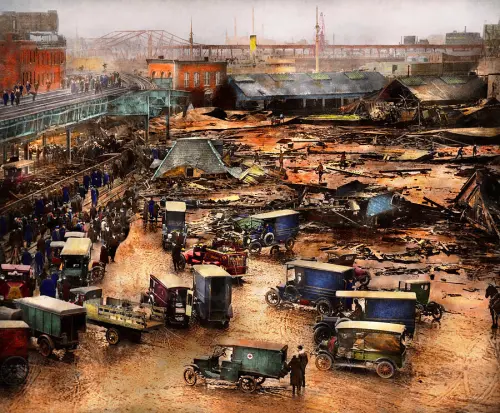
The North End of the Boston was flooded with two millions gallons of syrup after a storage tank collapsed. The waves of syrup were claimed to be anywhere from 15 to 40 feet high.
“The buildings seemed to cringe up as though they were made of pasteboard.”
“It was too late. A second later, it seemed, there was a crash. Doors and windows were as if they had not existed. The molasses poured in — the wave was 15 feet high when it struck the building — and everything in the office, including myself and the clerks, was toppled over like nine-pins under the weight of the wave.”
Witness Accounts
The Flood
It’s probably an odd historical event to be remembered for but because of it’s oddity I don’t think Boston will ever shake the Great Molasses Flood from its story.
A storage tank of molasses, 2.3 million gallons to be exact, filled the streets of Boston. The wave ran through the streets at speeds of up to 35 miles per hour and filled in alleyways and cellars. Buildings were destroyed and 21 people were suffocated in the thick goo.
The cause of the floor is two fold: shoddy construction of the storage tank and science. Witnesses claimed they heard a loud sound that resembled an explosion, then creaking in the distance before the wave came into sight. The tank was built with thin, cheap steel and it was built quickly thanks to our need for alcohol during WWI. No inspections needed, just get the molasses stored and ready for conversion. This mixed with an “unseasonably” warm day in January, which caused the molasses to expand, lead to the tank simply exploding under the pressure. Though the flood seemed to come and go quickly, the aftermath was detrimental to the city of Boston.
.
The Aftermath
According to an article on New Scientist, one of the reasons this flood was so devastating is because of the temperature. When the molasses was first released, it was warmer than the air. However, once out in the cold, it became thicker and harder. It moved slower. Even after an extensive clean up (which included unburying all the horses that apparently “died like so many flies on sticky fly paper”) the city smelled like syrup for years after.
There is also the damage that was caused to the ecosystem. A lot of the molasses ended up in the Boston Harbor, leaving the waters brown for weeks after.
The present
Even today, the streets of Boston can feel the effects of the Great Molasses Flood. An article in the Boston Globe from 2019 accuses Boston of not properly recognizing the event and those who lost their lives there.